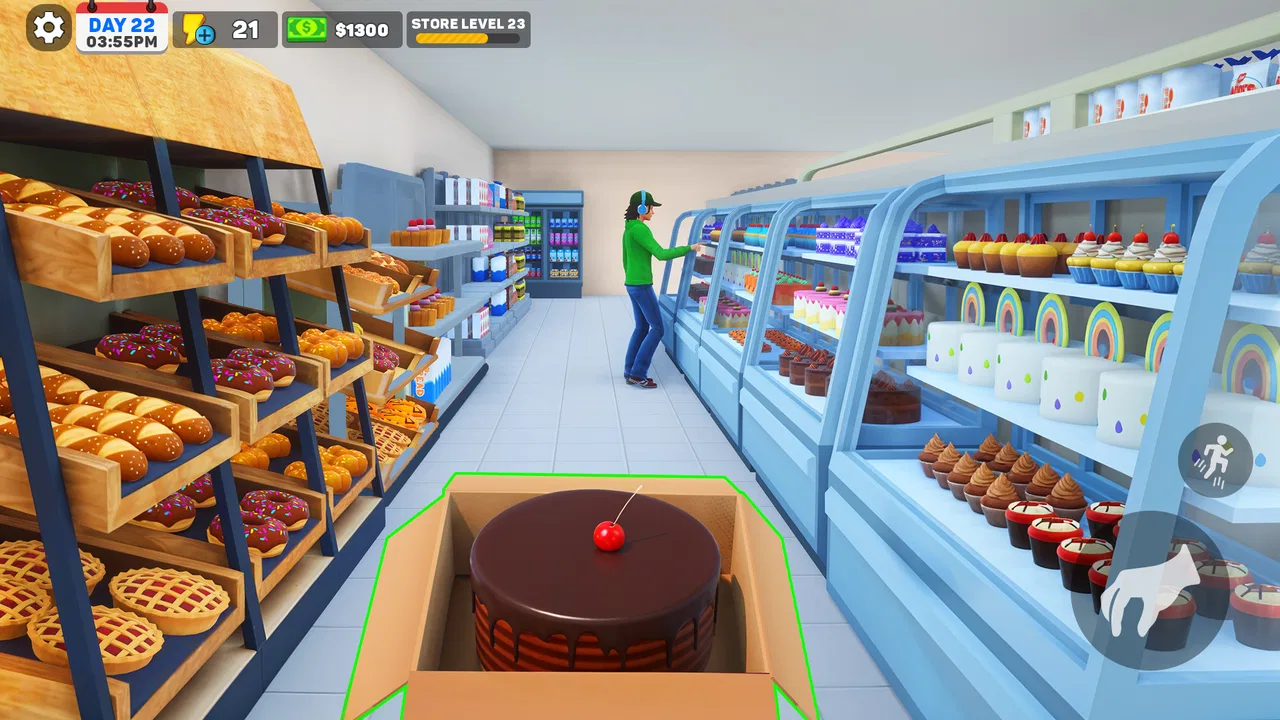
Bakery Supermart Simulator
- 4.1
- Rating
- 10.00M
- Installs
- Free
- Price

 Analysis by App-foxy
I spent my first sessions with Bakery Supermart Simulator expecting a light supermarket game and found a simple strategy experience built around the familiar rhythm of serving shoppers, handling a bakery-focused store, and keeping daily activity moving. It is free to start, easy to understand, and aimed at Everyone, so it feels accessible rather than demanding. The important question is not whether it is pleasant for an evening—it is whether the routine remains interesting once the novelty of running a virtual shop wears off.
My short answer is that it works best as a casual game for brief visits. The bakery and supermarket setting gives it more personality than a completely generic cash-register title, while the simulator format makes the first few sessions immediately readable. However, players looking for deep economic planning, a complex management system, or a game that constantly surprises them may find the experience too light. I would recommend trying it, but I would not treat it as an automatic long-term replacement for a deeper strategy game.
What the first week feels like
The opening appeal comes from the clear connection between action and result. A store simulator is satisfying when the player can quickly understand what needs attention and see the shop respond. Here, the bakery-supermarket theme gives those ordinary tasks a recognizable context: it feels more inviting to organize food and serve customers than to manage an abstract set of menus and counters.
You May Also Like

 Blood Strike: 2.5 Anniversary
Blood Strike’s Loadouts Turn Every Drop Into a Tactical Gamble
A close look at Blood Strike’s custom loadouts: how fast access to signature weapons reshapes its battle royale rhythm, rewards preparation, and narrows the gap between fights.

 Pandora - Music & Podcasts
Pandora’s Music Is Easy to Start, but Harder to Recover
Pandora’s strength is its low-effort path from a seed to a station. Its weak spot is how much confidence it asks you to place in connection, setup, and quiet recovery.

 8 Ball Pool
 Is Built on Rivalries, Rematches, and Routine
A close look at the rivalries, rematches, shared routines, and unanswered safety questions that turn a quick pool match into a persistent mobile community.

 Samsung Music
’s Quiet Strength Is Playing What You Already Own
Its reach comes less from spectacle than from dependable access to a personal library. That simplicity is both the app’s strongest retention engine and its ceiling.

 AccuWeather: Weather Radar
AccuWeather Review: A Quick, Clear Forecast for Everyday Decisions
For everyday plans, the best forecast is the one you can understand quickly. AccuWeather makes rain timing, radar, and local conditions easy to act on, with a few trade-offs.

 Hill Climb Racing
Why Hill Climb Racing Still Turns Crashes Into One More Run
A tiny car, a bumpy hill and one more upgrade: Hill Climb Racing keeps resurfacing because its simple chaos makes every near-miss feel personal.
More From Our News Desk



I also like that the game does not require a long explanation before it becomes readable. The basic idea is obvious enough for someone who has never played a supermarket simulator. That makes it suitable for a short break, especially when I want something more active than a puzzle but less demanding than a large strategy campaign.
The first sessions benefit from curiosity. I want to see how the shop develops, what the next improvement changes, and whether a busier store can be handled more efficiently. That early loop is the strongest part of the experience because every small action feels connected to progress. Even routine work can be enjoyable when the game gives it a visible purpose.
For a realistic everyday scenario, I can see myself opening it while waiting for an appointment, playing through a small task, and closing it again without needing to remember a complicated storyline. It also suits a quiet evening when I want a low-pressure management game. The Everyone rating matches that approachable tone, although parents should still remember that optional purchases are available inside the free game.
Why the bakery setting matters
The bakery angle is not just a label to me. It gives the store a warmer identity and makes the simulation feel less like a spreadsheet. A supermarket can easily become visually and mechanically anonymous, but bakery products suggest a more specific kind of shop: one where presentation, availability, and customer flow feel important even when the underlying controls remain simple.
That theme also helps the game stand apart from ordinary cash-register games. A pure checkout title can become repetitive almost immediately because every customer interaction follows the same narrow pattern. A bakery-supermarket concept at least encourages me to think about the whole shop rather than only the register. The result is still casual, but the setting gives the routine a reason to exist.
My practical advice is to avoid rushing through the first sessions just to unlock the next thing. I found the game more enjoyable when I treated each visit as a small management exercise: notice what is slowing the store down, decide what deserves attention first, and then check whether the next session feels smoother. That approach creates more involvement than tapping through tasks without observing the effect.
Who will enjoy the early experience
This is a good starting point for players who like casual strategy games but do not want a steep learning curve. It is also a reasonable choice for younger players and families who prefer a friendly commercial setting over combat or competition. Someone who enjoys organizing spaces, serving customers, and watching a small business become busier will understand the appeal quickly.
It is less suitable for anyone expecting a detailed business simulator. The game’s attraction is its accessibility, not the promise of a highly technical model of retail. If you want complex supply chains, precise staff scheduling, elaborate market behavior, or a long campaign with difficult trade-offs, a dedicated management game will probably offer more lasting depth.
The first-week question is therefore easy to answer: yes, there is enough immediate appeal to justify downloading it. The harder question begins after the first burst of discovery, when the player already understands the basic rhythm and needs a reason to return.
What can keep it useful from month to month
Long-term value in a simulator depends on whether routine actions continue to produce meaningful decisions. I look for three things: a reason to improve efficiency, enough variation to prevent every visit from feeling identical, and progress that does not become a meaningless sequence of taps. Bakery Supermart Simulator has the right foundation for short recurring sessions, but its lasting appeal depends heavily on how much personal interest I bring to the management loop.
The strongest recurring use case is habit-based play. I can imagine checking in during a daily break, completing a small amount of store work, and leaving before the session becomes tiring. That is a better fit than expecting a long, dramatic play session. The game’s subject is ordinary enough to support a routine, and its strategy elements give the routine a little more purpose than a simple idle activity.
I found that setting a small goal helps. Instead of opening the game with the vague hope that it will entertain me indefinitely, I can decide to improve one part of the store’s operation or reach the next meaningful step before stopping. This turns a potentially repetitive session into a compact challenge. It is a useful habit for any simulator, but especially here because the appeal comes from gradual management rather than a constantly changing narrative.
Another practical tip is to pay attention to the difference between progress and activity. A busy screen can make a session feel productive, but not every action necessarily improves the experience equally. I prefer to pause and consider which upgrade or task actually reduces friction. That mindset helps preserve the strategic side of the game and prevents me from treating it as a button-pressing routine.
Free entry and optional spending
The game is free, which makes it easy to test without committing money first. That is important for a simulator with a narrow theme: some players will immediately enjoy the bakery-store atmosphere, while others will discover that the routine is not for them. A free starting point lets me make that decision through play rather than through screenshots or a short description.
Optional purchases range from $0.99 to $31.99 per item. I would approach those purchases carefully, particularly if the main reason for buying is impatience with normal progress. In a management game, spending can remove the very waiting or planning that makes the activity satisfying. My recommendation is to play long enough to understand the regular rhythm before considering any purchase, then ask whether it adds enjoyment or merely shortens the path.
This is also where the game’s month-to-month value becomes personal. A player who enjoys slow improvement may be perfectly happy staying within the free experience. Someone who wants rapid expansion may feel pressure to spend, especially after the early excitement fades. I would not make purchases part of the basic recommendation; the free entry is the reason to try it, while spending should remain an optional decision based on genuine enjoyment.
How it compares with familiar alternatives
Compared with a basic cash-register game, this title has a broader identity. The supermarket and bakery combination gives me more of a store-management feeling instead of reducing the experience to scanning or serving. That makes it the better choice for someone who wants a little planning around the customer-facing work.
Compared with a deeper tycoon or business simulator, it is more approachable but less likely to occupy my attention for long uninterrupted sessions. A complex alternative may offer more systems, harder decisions, and stronger reasons to optimize every detail. Bakery Supermart Simulator is preferable when I want a gentle strategy game that can be understood quickly and played in short bursts.
It also sits somewhere between an idle game and an active simulator. It is not appealing only because numbers rise in the background; I still want to participate in the store’s operation. At the same time, it does not demand the concentration of a competitive strategy title. That middle ground is useful, but it can also make the game feel less urgent than either a focused idle game or a full management simulation.
The maintenance burden behind the easy start
The main maintenance burden is attention. Even a friendly store simulator asks me to remember what I was improving, what task I planned to handle next, and whether my current routine is still producing satisfying progress. If I leave it for a while, the challenge is not learning the controls again; it is rebuilding the habit and deciding whether the same loop still feels worthwhile.
That makes session length important. I would not recommend forcing long play sessions simply because the game is available. The experience is better when I stop while the shop routine still feels pleasant. Returning later with a clear small objective can preserve the sense of management, whereas playing until every action feels automatic can make the game seem shallower than it is.
Version 0.1.33 shows that the game is still presented as a relatively early-stage product rather than a decades-old, fully settled simulation. I would keep expectations realistic around polish and depth. That does not make it a poor choice, but it does mean the best way to judge it is by its current casual loop, not by imagining a much larger game that may or may not arrive later.
The developer, Big Glock Studio, has chosen a concept that is easy to recognize and easy to explain. That is a strength for accessibility, but it also places pressure on the details. Once I understand the store’s basic routine, the smaller decisions need to remain interesting enough to justify continued attention. If they do not, the theme alone cannot carry the game indefinitely.
Where the routine creates friction
The first friction point is repetition. Serving customers and maintaining a store can be satisfying when each visit changes the situation, but the same tasks become tiring when they feel like obligations. I noticed that the game works best when I approach it with a specific purpose. Opening it without a goal makes the routine easier to dismiss.
The second issue is the gap between a pleasant simulator and a genuinely strategic one. The game belongs in the strategy category, but casual strategy does not necessarily mean deep planning. Players should not choose it expecting every decision to have a complicated consequence. Its decisions are more useful as light guidance for a relaxing store routine than as demanding economic puzzles.
The third concern is monetization pressure. The available purchase range is wide, and that can affect how comfortable a player feels about continuing for many weeks. I prefer games that let progress feel natural without constantly making the paid route seem like the sensible route. Here, I would protect the game’s relaxing quality by refusing to spend until the free loop has already proved it can hold my attention.
There is also a personal maintenance cost in keeping any casual game installed. If I already have several daily games competing for attention, this one needs to offer a distinct reason to return. Its bakery-supermarket identity is enough to separate it from a generic idle title, but it may not be enough for someone who already plays a more detailed retail simulator.
Who should install it, and who should skip it
I would suggest giving it a try if you enjoy store-management games, like visible gradual progress, and prefer short sessions over complicated campaigns. It is especially suitable for players who want a friendly setting and a game that can be understood without studying a manual. The free price makes experimentation straightforward, and the age rating keeps the presentation broad and accessible.
I would skip it if your priority is competitive strategy, narrative development, or highly detailed business planning. It is also a weak fit if repeated service and improvement tasks quickly lose their charm. A deeper tycoon game will be a better investment of time for players who want to analyze prices, staffing, logistics, and long-term market decisions in detail.
For parents choosing a game for a child, the Everyone rating is reassuring as a general content signal, but I would still explain that optional purchases exist. For adults, the more important question is whether the bakery setting feels distinctive enough to support a recurring habit. I enjoyed the atmosphere more when I played in short, purposeful visits than when I expected it to provide endless variety.
The game has reached over 10 million installs and holds a 4.3 average from around 24 thousand ratings, which suggests that its approachable premise has found a broad audience. I read that popularity as evidence that the basic idea is easy to enjoy, not as a guarantee that every player will find lasting depth. The experience remains highly dependent on how much repetition a person accepts.
My long-term verdict
Bakery Supermart Simulator earns a place on my device as a casual, low-pressure strategy game, but not as a permanent main game. Its best quality is the way it turns a familiar bakery and supermarket setting into a simple management routine that I can understand quickly and revisit without preparation. The first week is pleasant because progress feels tangible and the store gives the player an inviting goal.
After the novelty fades, the game needs disciplined use. I get more value from it when I play in compact sessions, choose one practical objective, and stop before the routine becomes mechanical. That approach reduces fatigue and makes the next visit feel intentional. If I expect a constantly expanding set of surprises, I am more likely to become disappointed.
The free model is a sensible reason to test it, while the optional items mean I would keep spending firmly under my control. I would not pay simply to rush through the early loop. First, I would confirm that the ordinary store work remains enjoyable and that improvements genuinely change how I want to play.
My final recommendation is therefore measured: try it if you want an accessible bakery-themed supermarket simulator for short breaks, especially if you like organizing progress more than chasing intense competition. Keep it installed if the daily shop routine becomes a relaxing habit. If it starts feeling like maintenance rather than play, move on to a deeper management game instead. Its lasting value comes from the rhythm you create around it, not from endless novelty.
FAQs for Bakery Supermart Simulator
01What is Bakery Supermart Simulator about?
Bakery Supermart Simulator is a fun and engaging game where players manage and expand their own virtual bakery. Players can bake a variety of goods, serve customers, and upgrade their store. The game combines elements of time management and strategy, providing a comprehensive experience for both casual and dedicated gamers.
02Is Bakery Supermart Simulator free to play?
Yes, Bakery Supermart Simulator is free to download and play. However, it offers in-app purchases for players who wish to enhance their experience with additional features, items, or upgrades. These purchases are optional and not necessary to enjoy the core gameplay.
03What are the system requirements for Bakery Supermart Simulator?
For Android users, Bakery Supermart Simulator requires Android version 5.0 and up. For iOS, it requires iOS 11.0 or later. The game is optimized for both smartphones and tablets, ensuring smooth performance across a wide range of devices. Ensure you have enough storage space for seamless installation.
04Does Bakery Supermart Simulator require an internet connection?
Bakery Supermart Simulator can be enjoyed offline, allowing players to manage their bakery without an internet connection. However, certain features, like in-app purchases and leaderboards, require online access. Playing online also ensures you receive the latest updates and events.
05How does multiplayer work in Bakery Supermart Simulator?
Bakery Supermart Simulator offers a competitive multiplayer mode where players can challenge friends or other players worldwide. By connecting online, players can participate in events, share achievements, and climb the leaderboards. This feature adds a social element, enhancing the overall gaming experience.
Pros
- Engaging gameplay with realistic bakery tasks.
- Wide variety of bakery items to create.
- Intuitive controls make it easy to play.
- Colorful graphics enhance the experience.
- Frequent updates with new features.
Cons
- Limited customization for bakery decor.
- In-app purchases can be pricey.
- Occasional ads disrupt gameplay.
- Requires constant internet connection.
- Some levels feel repetitive over time.

Bakery Supermart Simulator
Gallery